Disability tax credit in Ontario: amounts, ODSP and your RDSP
Federal and Ontario credit amounts for 2025 and 2026
Ontario disability tax credit amounts for 2025 and 2026, how ODSP differs from the DTC, and how an RDSP and the Canada Disability Benefit are treated.

Ontario adds its own disability amount on top of the federal disability tax credit, and the province separately runs the Ontario Disability Support Program (ODSP), which the Canada Revenue Agency has nothing to do with. This guide keeps the two apart, gives the 2025 and 2026 numbers for the credits, and shows how ODSP treats an RDSP, grants, bonds and the Canada Disability Benefit.
How much is the disability tax credit in Ontario?
For the 2025 tax year, an approved adult in Ontario claims $10,138 federally and $10,298 provincially. At the federal credit rate of 14.5 percent and the Ontario rate of 5.05 percent, the maximum tax reduction is $1,990.06: $1,470.01 federal and $520.05 provincial. Both amounts are non-refundable, so they reduce tax owing rather than arrive as a cheque.
A child under 18 can claim a supplement on top of the base amount at both levels: $5,914 federally, for a claim of $16,052, and up to $6,007 in Ontario, for a claim of up to $16,305. Each supplement shrinks when child care or attendant care expenses above a threshold are claimed for the same child. Ontario's 2025 threshold is $3,518, applied on Worksheet ON428.
| 2025 tax year | Federal, line 31600 | Ontario, line 58440 |
|---|---|---|
| Claim amount, adult 18 and over | $10,138 | $10,298 |
| Child supplement, maximum | $5,914 | $6,007 |
| Claim amount, child under 18 with full supplement | $16,052 | $16,305 |
| Credit rate applied | 14.5% | 5.05% |
| Maximum tax reduction, adult | $1,470.01 | $520.05 |
| Maximum tax reduction, child under 18 | $2,327.54 | $823.40 |
Both levels move for 2026. The federal claim amount rises to $10,341 and the federal credit rate drops to 14 percent, so the federal side is worth $1,447.74 for an approved adult. Ontario's adult amount rises to $10,494 on the CRA's 2026 Form TD1ON, and the lowest Ontario rate stays at 5.05 percent, which values the provincial side at $529.95. Ontario's 2026 child supplement will appear on the 2026 Worksheet ON428.
These figures are the base case, and taxpayers high enough to pay the Ontario surtax can see a larger effective rate on provincial credits. The 2025 Ontario amounts come from the CRA's Ontario tax information for 2025, the authority for line 58440. Each province sets its own amount and rate, so do not apply one national percentage.
Our guide to how much the disability tax credit is worth works through the federal calculation. Ontario mirrors the federal transfer rules: line 58480 on Form ON428 matches federal line 31800 for a dependant's amount, as set out in our transfer guide.
Is the disability tax credit the same as ODSP?
No. The disability tax credit is federal, decided by the CRA, and it reduces income tax. The Ontario Disability Support Program is provincial, decided by the Ministry of Children, Community and Social Services, and it pays monthly income support with health benefits. The applications, medical tests and decision makers are separate, and approval for one does not grant the other.
The DTC looks at function in set categories and ignores your income and savings. ODSP asks about restrictions in work, self-care and community life, and it also tests your finances.
| Disability tax credit | ODSP income support | |
|---|---|---|
| Who decides | Canada Revenue Agency | The ministry's Disability Adjudication Unit decides disability; your local ODSP office decides finances |
| What you receive | A non-refundable tax credit, with transfer to a supporting family member | Monthly income support plus health benefits |
| Application | Form T2201, certified by a medical practitioner | Disability Determination Package: Health Status Report, Activities of Daily Living Index, Self Report and consent |
| Disability test | Severe and prolonged impairment with a marked restriction, significant limitations or life-sustaining therapy | Substantial impairment, continuous or recurrent, expected to last a year or more, with a substantial restriction in work, self-care or community life |
| Financial test | None | Financial need, with non-exempt assets within $40,000 for a single person or $50,000 for a couple |
| Needs the other one | No | No |
One does not open the other. A person who receives Canada Pension Plan Disability or Quebec Pension Plan Disability benefits skips ODSP's disability adjudication step as a member of a prescribed class, but DTC approval is not on that list. Someone on ODSP who has never been approved for the DTC still has to apply to the CRA.

If you are starting from nothing, the T2201 usually comes first, because it unlocks the RDSP and the Canada Disability Benefit. Our T2201 guide covers the form, who can certify and what to describe.
Who qualifies for the disability tax credit in Ontario?
Ontario applies the federal test. The CRA approves the credit when a medical practitioner certifies a severe and prolonged impairment: a marked restriction in one category, significant limitations in two or more, or life-sustaining therapy. A person who lived in Ontario on December 31 then claims the provincial amount from the same approval. Ontario sets no separate medical test.
The CRA's eligibility page lists the categories: walking, mental functions, dressing, feeding, eliminating, hearing, speaking and vision, plus life-sustaining therapy. A marked restriction means the person is unable to perform the activity, or takes at least three times longer than someone of similar age, even with therapy, medication and devices. It must be present all or almost all of the time, generally at least 90 percent, and last or be expected to last 12 months.
Nothing on that list is a diagnosis. The CRA reads daily function, so the description on the certificate matters more than the condition it names.
Does an RDSP affect ODSP in Ontario?
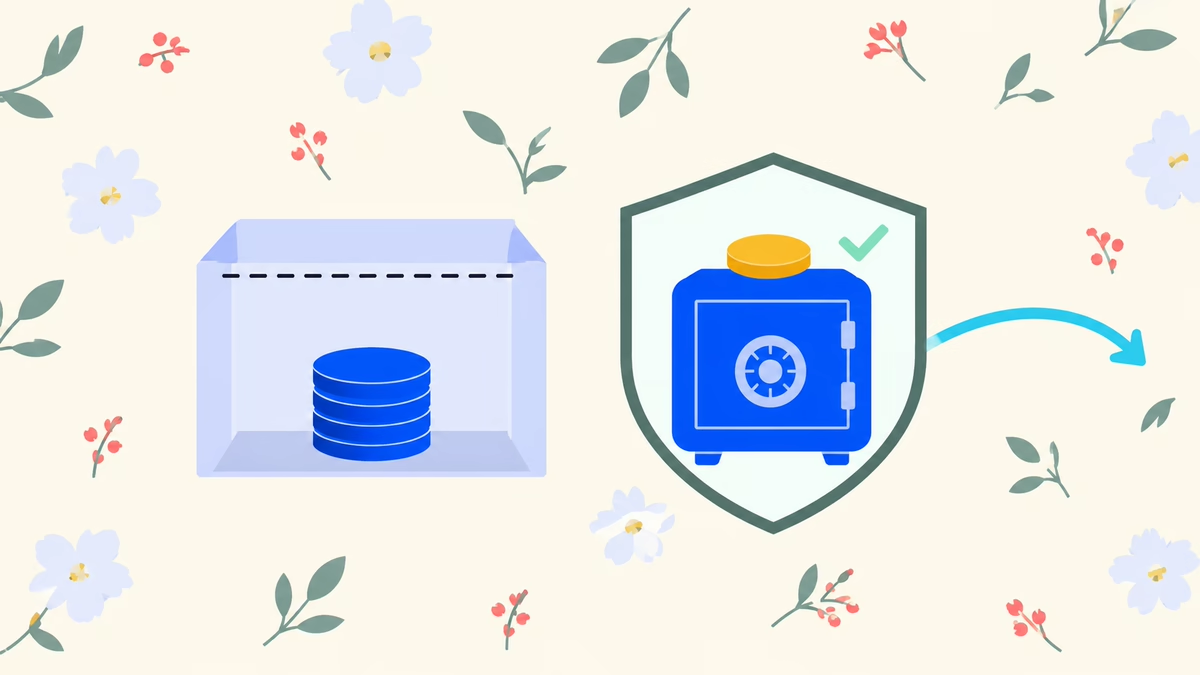
No. ODSP exempts every dollar held in an RDSP as an asset, with no maximum. It also exempts contributions from family and other third parties, Canada Disability Savings Grants and Bonds, income re-invested in the plan and all RDSP withdrawals for any purpose when income support eligibility is assessed.
That treatment comes from ODSP policy directive 4.10, Registered disability savings plans, last updated March 10, 2026. Ontario Works applies similar exemptions, although its directive ties the asset exemption to the contribution limits in the federal Income Tax Act. The federal government's own page on withdrawals names only Quebec, New Brunswick and Prince Edward Island as provinces where withdrawals may affect provincial benefits. Ontario is not among them.
| RDSP item | How ODSP treats it |
|---|---|
| Funds held in the plan | Exempt as an asset, no maximum |
| Contributions by family or other third parties | Exempt as income |
| Canada Disability Savings Grants and Bonds | Exempt as income |
| Investment income re-invested in the plan | Exempt as income |
| Withdrawals for any purpose | Exempt as income |
| Money left after a plan is closed | Withdrawals up to and including the month of closure are exempt; leftover funds count as an asset from the next month unless put toward an exempt asset, with six months to convert |
The federal rules still apply on their side. To open a plan, the beneficiary must be approved for the DTC. Lifetime contributions are capped at $200,000. A plan can receive up to $3,500 a year in matching grant, to a lifetime limit of $70,000, and up to $1,000 a year in bond, to $20,000, with no contribution needed for the bond. Our RDSP eligibility guide covers who can open a plan.
The ODSP exemption does not switch off the federal repayment rule. A withdrawal within 10 years of receiving grants or bonds can trigger repayment of $3 for every $1 withdrawn, up to what was paid in that period. The RDSP withdrawal guide explains when that applies.
Two more details help families plan. Moving savings into an RDSP before applying for ODSP is not treated as disposing of assets to qualify. And a payment from an absolute discretionary trust, often called a Henson-type trust, made to fund an RDSP is exempt as income, although monthly payments a trustee is obliged to make may not qualify.
What are the ODSP asset limits and income support rates in 2026?
ODSP counts non-exempt assets up to $40,000 for a single person and $50,000 for a couple, plus $500 for each dependant other than a spouse. From July 1, 2026, a single person can receive up to $1,436 a month for basic needs and shelter, after a 1.9 percent inflation increase. Amounts vary with family size and shelter costs.
The limit applies to assets that are not exempt, which is why the exemptions matter. A savings account counts, while the home you live in, your primary vehicle, an RDSP, an RESP and a prepaid funeral do not. Interest earned inside the ceiling is exempt as income but is treated as an asset the following month.
| Item | ODSP treatment |
|---|---|
| Bank balances and investments outside an RDSP | Count toward $40,000 (single) or $50,000 (couple) |
| RDSP funds | Exempt asset |
| Home, primary vehicle and RESP | Exempt assets |
| Gifts, voluntary payments and inheritances | Up to $10,000 per person in a 12-month period without affecting income support |
| Canada Disability Benefit | Exempt as income |
Money in a plan stays outside the asset ceiling, while the same money in a chequing account counts. Ontario's ODSP eligibility page lists the current limits and the exempt items, and your caseworker confirms how they apply to your file.
How does the Canada Disability Benefit fit with ODSP?
Ontario treats the federal Canada Disability Benefit as exempt income for social assistance, so it does not reduce ODSP. The benefit pays up to $204.20 a month from July 2026 to June 2027 and requires DTC approval and an age of 18 to 64. The CRA subtracts RDSP income when setting the amount.
Ontario states on its ODSP page that receiving the benefit will not affect eligibility for ODSP or the amount of the payment. The CRA bases July 2026 to June 2027 payments on the 2025 tax return, so you and any spouse or common-law partner must have filed it. The federal benefit amount page explains the income tests.
A new $150 supplemental payment starts in fall 2026 to offset the cost of obtaining DTC approval. It is a lump sum for each approved DTC certificate that qualifies a person for a monthly benefit payment, and nobody applies for it separately. Back payments can reach 24 months from the application date, but never before June 2025.
What else does DTC approval open for Ontario families?
Approval opens more than two credits. It allows an RDSP, qualifies adults aged 18 to 64 for the Canada Disability Benefit, and gives a family with a child under 18 the child disability benefit, up to $290 a month per child from July 2026 to June 2027. An unused credit can pass to a supporting family member.
The family must be eligible for the Canada child benefit and the child for the DTC. A family already receiving the Canada child benefit for a DTC-eligible child gets it automatically, and the CRA's child disability benefit page sets the reduction above an adjusted family net income of $82,847.
Ontario adds one small item. For 2025, a family can claim $544 on line 76 of Form ON428 for each dependant with an impairment for whom it has claimed an amount on line 58160, 58185 or 58480. Ask the preparer whether it applies.
If you qualified in earlier years and never claimed, the CRA allows adjustments going back up to 10 years, which may produce a refund. The retroactive claim guide shows the calculation.
Can you claim the disability tax credit while on ODSP?
Yes. ODSP does not require the DTC and the DTC does not depend on ODSP, so a person can hold both, one or neither. ODSP asks recipients to report tax benefits as income, and its public eligibility page does not say how a lump-sum refund from a retroactive claim is treated. Ask your caseworker before you file.
For someone on ODSP who has not been approved, the order is a T2201 completed by a practitioner who knows your daily function, a request to adjust earlier returns if you were eligible, and a check with the caseworker on how any refund is reported. An RDSP can be opened only after approval.
Frequently asked questions
How much money do you get from the disability tax credit in Ontario?
For 2025, an approved adult can reduce tax by up to $1,990.06: $1,470.01 federally and $520.05 in Ontario. A child under 18 with the full supplement can reduce it by up to $3,150.94. The credit lowers tax owing and is not paid as cash, although an unused amount can be transferred.
Does Ontario have its own disability tax credit?
Ontario has its own disability amount, claimed on line 58440 of Form ON428, but you need federal DTC approval to claim it. For 2025 it is $10,298 for an adult, and Ontario residents on December 31 claim it. The province applies the CRA's eligibility rules rather than running a separate medical review.
Do you need the disability tax credit to get ODSP?
No. ODSP runs its own Disability Determination Process with a health care professional, a Self Report and a decision from the Disability Adjudication Unit. DTC approval is neither required nor a shortcut. Only the prescribed classes, such as people receiving Canada Pension Plan Disability benefits, skip adjudication.
Does an RDSP count as an asset for ODSP?
No. ODSP treats all funds held in an RDSP as an exempt asset, with no maximum. Contributions, grants, bonds, re-invested income and withdrawals are exempt as income as well. Money kept in an ordinary bank account counts toward the $40,000 single or $50,000 couple limit unless another exemption applies.
Can you receive the Canada Disability Benefit and ODSP together?
Yes. Ontario treats the Canada Disability Benefit as exempt income for social assistance, so it does not reduce ODSP. The federal benefit requires DTC approval, is open to ages 18 to 64 and pays up to $204.20 a month from July 2026 to June 2027, depending on adjusted family net income.
Is it hard to qualify for the disability tax credit?
The test is functional rather than medical. A diagnosis alone does not carry a file. The certificate needs to describe how often the limitation occurs, how much longer tasks take and what help is needed. A certificate that stays silent on those details gives the CRA little to assess.
Where to start in Ontario
If you have neither approval, start with the T2201, because it unlocks the savings plan, the grants and the Canada Disability Benefit. If you receive ODSP, check whether you have ever been approved for the DTC.
If you are already approved, the next questions are whether a plan is open and whether past grant and bond entitlements have been collected. Our disability tax credit service page sets out how we handle an application.